Thursday, November 24

Senior Project REQUIREMENTS Revisited

FYI
Senior Project (Details Revisited)- The objective of the senior project is to create and polish material to showcase a student’s skills and abilities in broadcast communications. Senior BC projects are restricted to the creation of content for the audiences of Titan Radio, Digital 88.9 News, the Titan Sports Network, WCN, The County Line, and Coach’s Corner.

Before you begin your project, you will draft a project proposal in which you summarize with specifics what you want to create for your portfolio(s)/resume tape(s)/audition tape(s). You will identify specific assets and weakness you have in relationship to your objectives, develop a plan for utilizing those strengths and overcoming the limitations and create a timeline for presenting your content to a real audience on scheduled, hard deadlines. You should identify specifics such as day(s), hours, etc., that you will set aside each week for this endeavor.

Each student is responsible for maintaining the regular air checks, tapes, etc., for his or her project. It is your responsibility to maintain and keep your dubs, air checks, etc. throughout this endeavor. You may not scramble at the last minute to make dubs, gather tapes, etc. Failure to maintain and progress your work week to week will not be acceptable.

To complete the project you must meet all outcomes and deadlines identified in your proposal. You must also meet the department’s minimum professional standards for audio and video productions. Failure to meet those outcomes, deadlines and standards will result in zero points.

Thursday, November 17

Class Schedule UPDATE


CLASS SCHEDULE CHANGES
We will not meet as a class on December 1 or December 8. Instead each of you will schedule an appointment to meet with me to review your senior project proposal, your project and the feedback/evaluation you received from your off-campus contact.

Mark your calendars as we will NOT meet as a class on December 1 or December 8.
Instead, each member of the class will schedule an appointment to meet with me. We will meet to review your senior project, your goals and you will present the feedback and review you received on your project from your outside source.

This is what you will need to do:
  1. You must make the appointment to meet with me by December 1.
  2. You must bring an updated senior project proposal, complete with your original material and notes of your updates on timeline, changes, etc.
  3. You must share your project with me (if it’s video we can meet in the edit bays or control room, if it’s radio we can meet in the production room).
  4. You must bring documentation when you present your information/feedback from your outside reviewer.
  5. You must have a tentative decision and protocol on what you plan to do for the senior project redux.

    Any questions?

Tuesday, November 8


Can't get enough of LOST?
ABC's capitalizing on the show's popularity with something called "Lost Video Diaries." The Diaries introduce two characters stranded with the cast featured on the primetime version. The Hollywood Reporter reports, ABC's looking to partner with a wireless company, perhaps Verizon. The series will be available sometime next year.

Monday, November 7

Searching the Blogosphere

Google now features a search engine for weblogs.

With the promise to "find blogs on your favorite topics" it should be a helpful tool for some folks since some sources claim there are more than 10-million blogs on the 'net.

I googled for my name and topics I have blogged about and some of the hits were indeed on my blog. Cool.

By the way, Yahoo! has apparently enabled it's news search engine to scan through the blogosphere for a while now so the Google search is not new. However, Yahoo! fell short in my searches of my own blog topics.


http://news.search.yahoo.com

Sunday, November 6

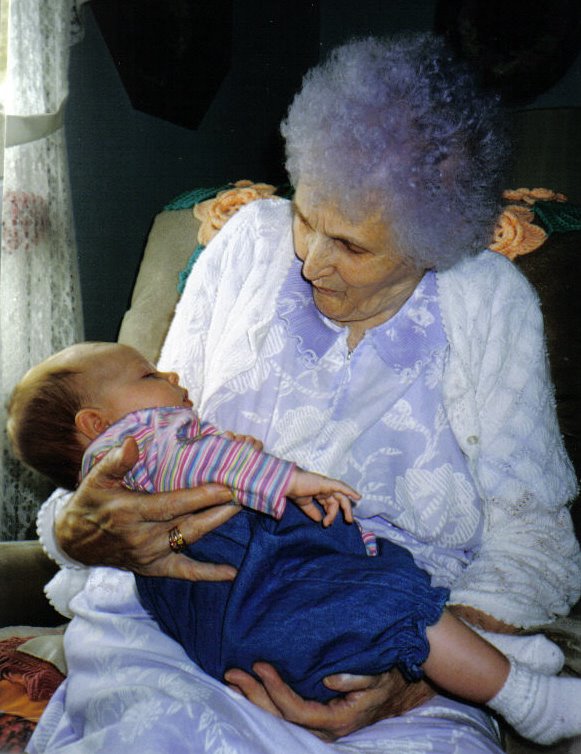
Remembering My Grandmother

My grandmother, Nellie Johnson, recently passed away at the age of 99. She died on October 26, 2005, in a nursing home in Kingwood, WV.

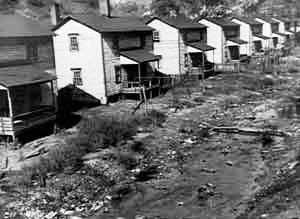
Her life in rural West Virginia was always a struggle against poverty. Whether it was growing up in Appalachia as America headed into World War I or raising a family through the Great Depression and World War II or living on her own in her golden years on a fix income in Tunnelton, she was the heart of her family. Over the decades she endured her loss of loved ones including all her siblings, her husband and five of her own children and several grandchildren.

Born in Cranesville, WV, the daughter of Ulysses S. Jefferys and Emma M. Ringer Jefferys, she married my grandfather Edward Johnson and settled in the Newburg area. She had 10 children (four sons and six daughters) while she was married to my late grandfather for 45 years.

I am one of 26 grandchildren and my daughters Tess and Emma make up at least 45 great-grandchildren we can count at this point (and there are at least a dozen great-great-grandchildren).

My daughter Tess has been busy lately writing down her thoughts about her great-grandmother and what she can remember about her. I thought it appropriate for me as well and what better place to reflect than in my weblog. I know it's a bit off topic when it comes to broadcasting and my professional domain, but my grandmother was alive for the birth of broadcasting and the invention of television, etc.

When talking to Tess about why I was not saddened by my grandmother’s death I explained I felt we should celebrate her incredible journey of 99 years. I know it’s hard for eight-year old Tess to understand this, but I suggested we think about Grandma Johnson as a time traveler.

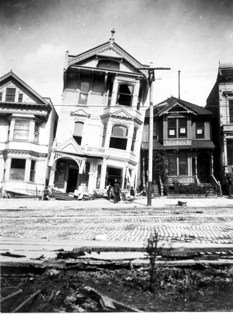
Each time we hear a historic reference to the 20th Century we know Grandma Johnson was there for it. She was born in 1906 the year of the San Francisco earthquake which American author Jack London reported on as a journalist for Collier's Weekly as an eye-witness to the disaster.

My grandmother was born when Teddy Roosevelt held the White House—and she lived to see 13 additional presidents elected.

When she was a little girl, November 11 was called Armistice Day to mark the end of World War I. Later in it became Veterans Day. She sent sons to war against the Nazis and she saw communism rise and fall in Europe.

While the telephone, electricity and indoor plumbing were innovations when she was a child, she would not benefit from such amenities for decades—indoor plumbing came to her distant farm house in the 1970s after my grandfather’s death. It’s incredible to think of all the scientific discoveries and breakthroughs that occurred during the course of her life—from the polio vaccine to the atomic bomb to the lunar landings and the Internet. Her life span came during extraordinary times. When reflecting on her life I think about how the world has changed--contemplating 20th Century history now means thinking about my grandmother and her journey as a witness and participant on that timeline.

Wednesday, October 26

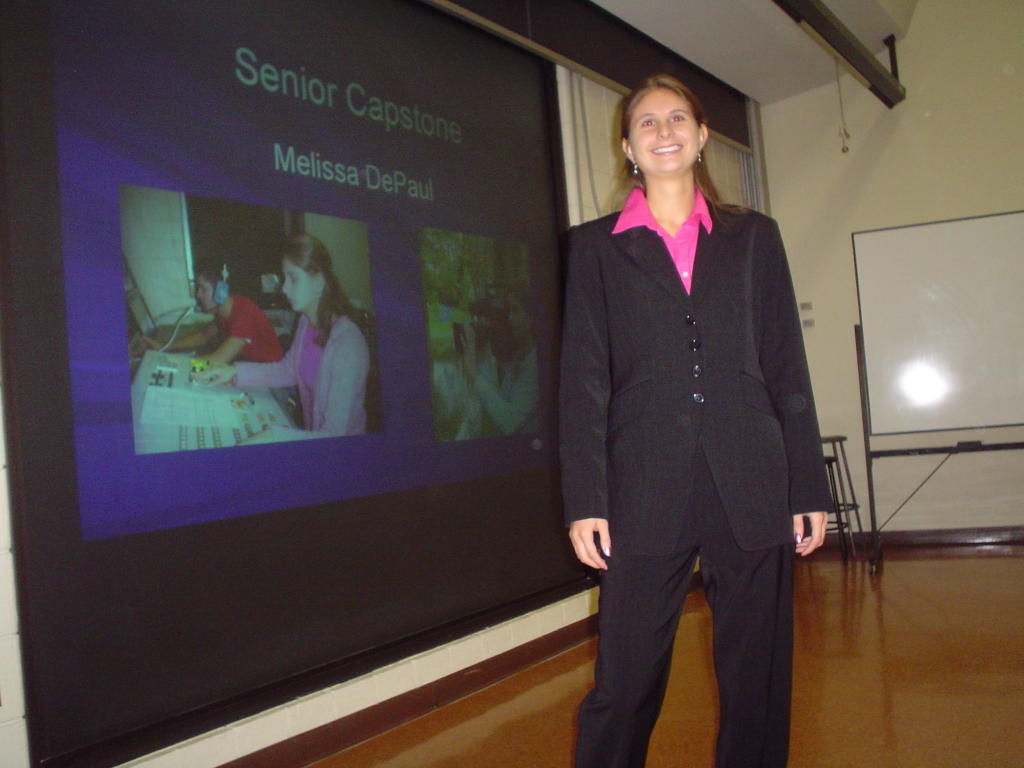
Presenting Melissa DePaul

Melissa DePaul put herself out there for the Westminster community, friends and family to inspect as she made her senior presentation on Tuesday afternoon. Her confidence and experience should serve her well going into the job market She's updated her blog with an account of how things went. Check it out!

Melissa is a great example of the student who is prepared to cope with a crisis. In addition to having her portfolio samples on DVD, she had a VHS tape as backup and she also pulled stories from PC sources and the web.

Unfortunately, the audio quality on the DVD and VHS were low and somewhat distorted. We're still trying to determine exactly what the problem was. Melissa did test both out in another classroom since the lecture hall was locked the night before. However, nothing will ever replace testing out the equipment in the room you will use and the importance of rehearsing in the venue where you present. You can identify problems well in advance and you have time to resolve these issues.

Monday, October 24

The BC Capstone Weblog "PIC" of the week...

Chris Zinkham wins the "capstone photo of the week" nod as he's added one to his profile. If you're a creative type looking for a gig in advertising, it's definitely one way to get attention. BTW...check out the profiles on each other's blog. You'll definitely learn something about your peers.


Take the BC CAPSTONE WEBLOG PROFILE QUIZ:

Which capstone student has a thing for Wuthering Heights and Sex, Drugs and Cocoa Puffs?


Who's blogging habits mean doubling up on the blog workload this semester?


Which BC blogger sleeps with the remote contol?


Identify the capstone student with more than a casual curiosity with something called the Kingdom of Loathing?

Name the blogger who's a Scorpio with a favorite read featuring a Native American girl left alone for 18 years on an island.

What's this guy's connection with a capstone blog?

Saturday, October 22

Melissa DePaul's Senior Presentation


You're Invited to Melissa DePaul's BC Capstone Presentation at 2:00 on the afternoon of Tuesday, October 25. She'll present in HSC G-12/Phillips Lecture Hall in Hoyt.

You can also check out Melissa's Capstone Weblog at
http://melissadepaul.blogspot.com/

Saturday, October 15

HIDDEN CAMERA as part of a Network News Social Experiment?

PART 1 of 4
A few weeks ago I was channel surfing and came across ABC’s 20/20 featuring a twist on the “hidden camera” investigation that I found to be as equally as unethical as any other use of hidden cameras.

ABC News hired actors Nate and Sarah to act out a scenario in which a couple gets into a heated, almost violent, argument in public. This report was dressed up as 20/20 series about ethical dilemmas to determine if people do the right thing.

The irony of this series is in the fact the reporter and producers forgot to consider the ethics of their own behavior in using deception as a tactic in this hidden camera experiment. It was so over the top and clearly unethical from a social science point of view (informed consent of the participants-- they became participants against their will) as well as from the journalism POV.

In fact the Poynter Institute has some strong guidelines about using hidden cameras in journalism and 20/20 failed to meet the burden (just as the network did with the infamous Primetime Live case with Food Lion in the 1990s).

20/20 also attempted to present this story as a social experiment and framed it as an academic exercise to probe society. I suspect most Institutional Review Boards (IRBs) at universities would refuse to allow such tactics because hidden cameras are clear violations of informed consent.

From my read of most credible social science approaches to research interviewing and participant observation, getting permission from people after the fact violates the spirit of the informed consent on so many levels (continued in next entry).

HIDDEN CAMERA as part of a Network News Social Experiment?

Part 2 of 4
As a journalist and an college instructor using social science methodology, I also take issue with 20/20's arrogance at framing these reports as "social experiments." The producers and reporter failed to follow any of the practices or conventions of social science research when they ignored issues of confidentiality and informed consent.

Furthermore, they put the subjects and "actors" in this test at risk. I watched and wondered whether any of the subjects on camera would use violence with the actor playing the abuser.

I was also surprised that academics/researchers were interviewed and played along with ABC’s tactics and reviewed the hidden camera video to offer feedback. That just underscores that it's okay to do the wrong thing if your intentions are dressed up as research (and it also can get you on TV).

The reporter included interviews with Professor Richard Gelles, an expert on domestic violence and dean of the University of Pennsylvania's School of Social Policy & Practice.

The 20/20 report showed what appeared to be Gelles viewing the hidden tapes with what I assume were students. However, it’s very possible his interview was recorded under false pretenses and taken out of context. This type of program essentially conducted experiments to see how people would react (a variation on Candid Camera or Scare Tactics) and hoped people would be willing to sign the consent form afterward (continued in next weblog entry).

HIDDEN CAMERA as part of a Network News Social Experiment?

Part 3 of 4
Hidden cameras are used routinely in television news. 20/20's "social experiment" use of hidden cameras is clearly a move in broadcast journalism to do something with hidden cameras that generates compelling video. However, it would seem that while ABC's legal team okayed the story because consent was given (even if it was after the fact) the tactics were viable. Once again the race to win viewers is greater than the potential harm or moral responsibility.


In my reading of academic approaches to social science research, I recall how some researchers have employed deception to gain access to subjects and to observe (the researcher who served as a lookout in public restrooms for married men engaged in public sex, secretly identified them and hunted them down for interviews about the behavior).

However, most social scientists denounce those approaches. Steinar Kvale's 1996 book InterViews : An Introduction to Qualitative Research Interviewing maps out the ethical issues in the seven stages of academic research (the realm ABC's 20/20 attempted to frame this hidden camera con job). Kvale's work and research clearly shows the academic community holds "INFORMED CONSENT" as paramount in any kind of social research, interview or experiment.

I guess the question is do the ends ever justify the means? I would suggest maybe we should reflect on how our peers and the public might see our actions once full disclosure is made. Will transparency help justify your actions?

I know new laws and proposed legislation in California are trying to tighten invasion of privacy issues to prevent entertainment shows from this kind of unethical behavior. But broadcast journalism gets First Amendment protection (continued in next blog entry).